

Asaf Mazar

Asaf Mazar

Behavioral Scientist

Hi there!

I’m a behavioral and data scientist, currently at Oura Ring. I study how people form and break habits, as well as how behavior is shaped by friction, or seemingly-small barriers that sometimes punch above their weight.

To understand behavior, I use methods ranging from randomized controlled trials, analytics of user trace logs, surveys, and adaptive interventions driven by generative AI. My work has appeared in top academic journals (PNAS, Psychological Science) and received broad media coverage (The Atlantic, Forbes, Financial Times, Fortune, CNN). In a previous life, I played harpsichord and jazz piano. You can read more about my work below or get in touch!

Over the years, I’ve had the fortune of knowing awesome people who helped me understand where I want to go and how to get there. I’m happy to pay it forward - feel free to reach out to me if you want to learn more about doing behavioral science within and outside of academia.

Education

PhD · Social Psychology

University of Southern California

MA · Psychology

University of Southern California

BA · Psychology & English Literature (magna cum laude)

Ben-Gurion University of the Negev

Interests

Habits Behavior change Randomized experiments (A/B tests) Causal inference Machine learning Friction Wearables Digital health Survey and experiment design

Featured projects

Laptop showing only a loading spinner while a learner waits.
In press Nature Human Behaviour

Microdelays disrupt online learning

Asaf Mazar, Geoff Tomaino, Abubakir Siedahmed, Ahmad Abdolsaheb, Neil Heffernan, Ziv Carmon, and Angela Duckworth

Learning increasingly happens online. We find that loading lags of just 1-2 seconds can disrupt learning. Across two online learning platforms and more than 80,000 learners, loading microdelays were tied to decreased engagement and poorer learning outcomes. Multiverse analyses and within-person comparisons provide evidence for the causal impact of this seemingly-minor friction.

  • Behavioral trace data
  • Quasi-experimental analysis
  • Multiverse analysis
A hand reaching for a ceramic coffee mug on a sunlit desk.
2022 Psychological Science

Illusory feelings, elusive habits

Asaf Mazar and Wendy Wood

Why do we reach for another cup of coffee? In an experiment and a study of everyday coffee drinking, people credited their feelings while overlooking their habits. Habit strength matched or exceeded inner states in predicting behavior, revealing a gap between what drives our actions and how we explain them.

  • Experiment
  • Ecological momentary assessment
  • Habit attribution
Two phone feeds show steady likes on one screen and varying likes on the other.
Working paper

Consistent rewards outperform variable rewards in habit formation

Asaf Mazar, Marissa Sharif, and Angela Duckworth

Conventional wisdom suggests that habits form best in response to variable rewards rather than consistent ones. We challenge this view using large scale field data (N > 1M posts) and six pre-registered experiments. In the field and in the lab, consistent rewards promote long-term persistence more effectively than variable rewards. Experimental evidence suggests that this persistence reflects automatic habitual responding. These findings question long-standing assumptions and highlight the role of predictability in habit learning.

  • Habit formation
  • Rewards
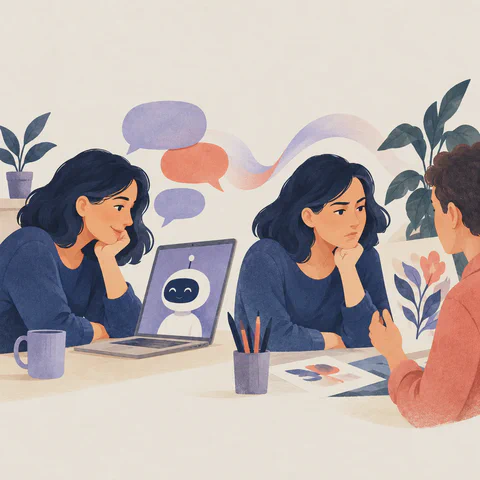
A person chats with a bot, then critically evaluates another person's creative work.
2024 PNAS Nexus

People judge others more harshly after talking to bots

Kian Siong Tey†, Asaf Mazar†, Geoff Tomaino†, Angela Duckworth, and Lyle Ungar
† Equal contribution.

Can talking to AI change how we treat other people? Across two preregistered experiments, people judged another person’s work more harshly after collaborating with a partner presented as AI rather than human.

  • Preregistered experiments
  • Human–AI interaction
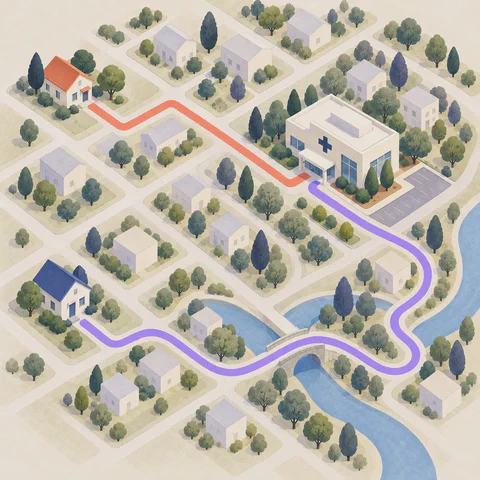
Two homes are connected to the same vaccine clinic by routes of different lengths.
2023 PNAS Nexus

Distance to vaccine sites is tied to decreased COVID-19 vaccine uptake

Asaf Mazar, Daniel Jaro, Geoff Tomaino, Ziv Carmon, and Wendy Wood

Small practical barriers can have large consequences for public health. People living farther from vaccination sites were less likely to get vaccinated (Study 1), and vaccine uptake increased when vaccine sites were opened nearby (Study 2). These findings highlight reducing friction as a powerful tool for promoting vaccination.

  • Geospatial analysis
  • Multiverse analysis
  • Health behavior