Featured projects

Laptop showing only a loading spinner while a learner waits.
In press Nature Human Behaviour

Microdelays disrupt online learning

Asaf Mazar, Geoff Tomaino, Abubakir Siedahmed, Ahmad Abdolsaheb, Neil Heffernan, Ziv Carmon, and Angela Duckworth

Learning increasingly happens online. We find that loading lags of just 1-2 seconds can disrupt learning. Across two online learning platforms and more than 80,000 learners, loading microdelays were tied to decreased engagement and poorer learning outcomes.

  • Behavioral trace data
  • Quasi-experimental analysis
  • Multiverse analysis
A hand reaching for a ceramic coffee mug on a sunlit desk.
2022 Psychological Science

Illusory feelings, elusive habits

Asaf Mazar and Wendy Wood

Why do we reach for another cup of coffee? When we asked people, they said it's usually out of tiredness. When we examined their behavior over the course of a week, we found that habit strength matched or exceeded fatigue in predicting coffee drinking. People overlook habits in explanations of behavior.

  • Experiment
  • Ecological momentary assessment
  • Habit attribution
Two phone feeds show steady likes on one screen and varying likes on the other.
Working paper

Consistent rewards outperform variable rewards in habit formation

Asaf Mazar, Marissa Sharif, and Angela Duckworth

Conventional wisdom suggests that habits form best in response to variable rewards rather than consistent ones. We challenge this view using large scale field data (N > 1M posts) and six pre-registered experiments. In the field and in the lab, consistent rewards promote long-term persistence more effectively than variable rewards. These findings question long-standing assumptions and highlight the role of predictability in habit learning.

  • Habit formation
  • Rewards
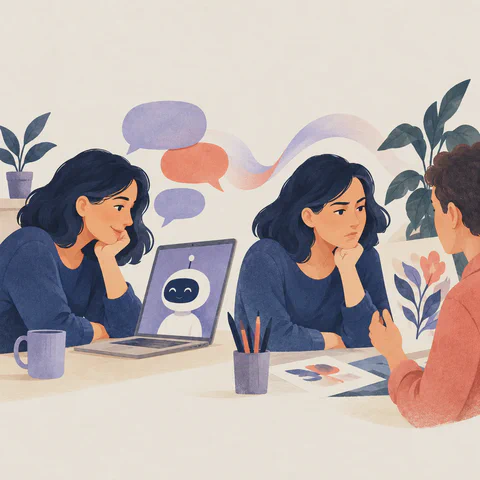
A person chats with a bot, then critically evaluates another person's creative work.
2024 PNAS Nexus

People judge others more harshly after talking to bots

Kian Siong Tey†, Asaf Mazar†, Geoff Tomaino†, Angela Duckworth, and Lyle Ungar
† Equal contribution.

Can talking to AI change how we treat other people? Across two preregistered experiments, people judged another person’s work more harshly after collaborating with a partner presented as AI rather than human. These findings suggest that the effects of human–AI interaction can extend into subsequent interactions with other people.

  • Preregistered experiments
  • Human–AI interaction
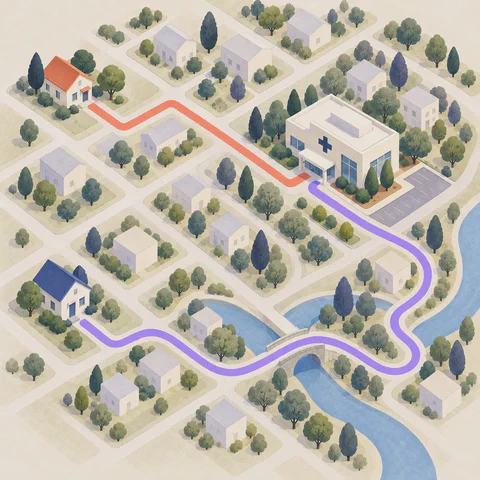
Two homes are connected to the same vaccine clinic by routes of different lengths.
2023 PNAS Nexus

Distance to vaccine sites is tied to decreased COVID-19 vaccine uptake

Asaf Mazar, Daniel Jaro, Geoff Tomaino, Ziv Carmon, and Wendy Wood

Small practical barriers can have large consequences for public health. People living farther from vaccination sites were less likely to get vaccinated (Study 1), and vaccine uptake increased when sites opened nearby (Study 2). Together, these findings highlight reducing friction as a practical tool for promoting vaccination, alongside efforts to address beliefs and intentions.

  • Geospatial analysis
  • Multiverse analysis
  • Health behavior