
Compare no delays and microdelays
No delays
Which number is larger?
Loading the next question…
Round complete! 🎉
Microdelays
2-sec loading between questions
Which number is larger?
Loading the next question…
Round complete! 🎉
Microdelays can disrupt learning. To learn more, click below!
Explore the researchOpen the experience on its own
Abstract
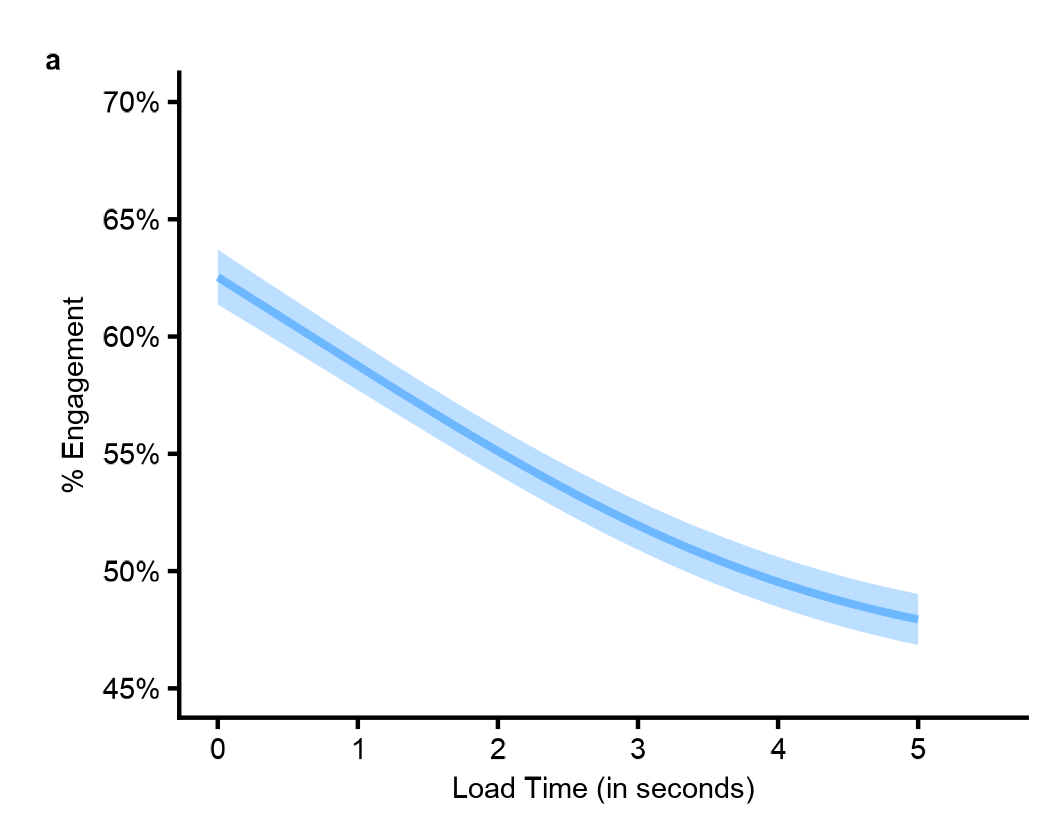
An ever-growing share of education happens on screens. We examine an overlooked feature of modern education: ‘microdelays’—brief loading lags that could hinder learners with slower internet connections. In two longitudinal quasi-experimental field studies, microdelays as short as 1–2 s predicted impaired learner engagement and achievement. When faced with microdelays, US primary and secondary school students (N = 26,707) completed fewer online math assignments, took longer to complete assignments, were more likely to get distracted mid-task and earned lower scores. Likewise, when aspiring coders, primarily in Latin America (N = 55,184), experienced microdelays, they spent less time actively engaged, multitasked more often, completed fewer lessons and were less likely to attain a key course milestone. Our results held across a range of model specifications, and leverage within-person variation in load times to support a causal interpretation. These findings identify microdelays as a hitherto-overlooked barrier in online learning.