2023 · PNAS Nexus
Distance to vaccine sites is tied to decreased COVID-19 vaccine uptake
Abstract
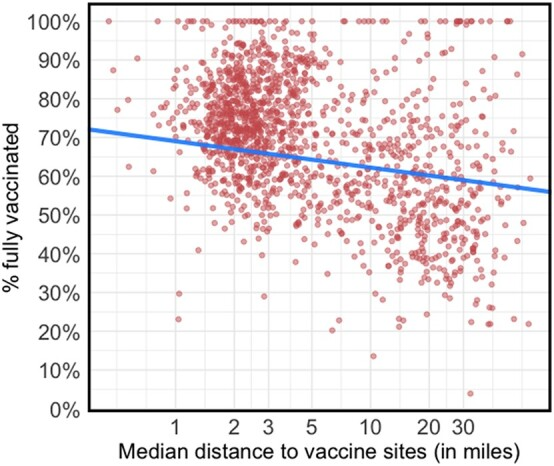
COVID-19 remains a leading cause of mortality in the United States, despite the widespread availability of vaccines. Conventional wisdom ties failure to vaccinate primarily to vaccine-skeptic beliefs (e.g. conspiracy theories, partisanship). Yet in this research, we find that vaccination is also hindered by travel distance to vaccine sites (a form of friction, or structural barriers). In study 1, Californians living farther from vaccine sites had lower vaccination rates, and this effect held regardless of partisanship. In study 2, Chicago zip codes saw an uptick in vaccination following vaccine site opening. These results proved robust in multiverse analyses accounting for a wide range of covariates, outcomes, and distance indicators. COVID-19 vaccination is hampered not only by vaccine hesitancy but also by structural barriers like distance. Efforts to boost vaccination could benefit from minimizing friction.